Where to See the Great Wildebeest Migration in Tanzania in 2027
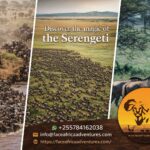
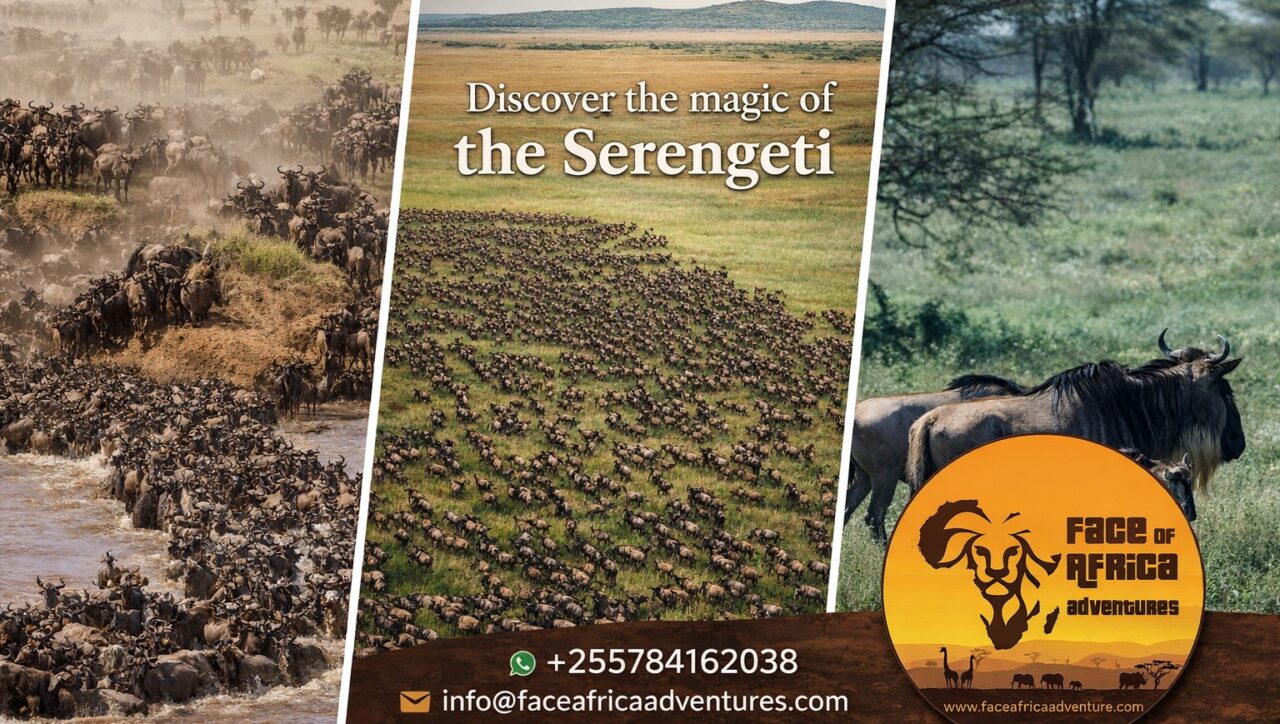
Imagine thousands of wildebeest moving across the endless golden plains of the Serengeti, zebras grazing alongside them, and lions watching from the grass. Suddenly, the herds begin to move, creating one of the most extraordinary wildlife spectacles on Earth.
This is the Great Wildebeest Migration, one of the main reasons travelers visit Tanzania for a safari.
If you are planning a Tanzania safari in 2027, knowing where to find the migration and when to travel can make a significant difference to your experience. The herds move throughout the year in search of fresh grass and water, so the best destination depends on the season and the wildlife experience you hope to witness.
At Face of Africa Adventures, we help travelers plan Tanzania safaris around seasonal wildlife movements, combining the Serengeti with other outstanding destinations in northern Tanzania.
In this guide, we explain where to see the Great Wildebeest Migration in 2027, the best months to visit, and how to plan a memorable safari.
What Is the Great Wildebeest Migration?
The Great Wildebeest Migration is the annual movement of more than a million wildebeest, accompanied by large numbers of zebras and gazelles, across the Serengeti ecosystem in Tanzania and the Maasai Mara in Kenya.
The animals follow seasonal rainfall and fresh grazing, moving between the southern Serengeti plains, the western and central regions, the northern Serengeti, and Kenya’s Maasai Mara before returning south.
The migration is not a single event that happens on one particular date. It is a continuous natural cycle, and the timing varies with rainfall and grazing conditions.
For travelers, this means that choosing the right region for the month of your visit is essential. Tanzania National Parks provides further information about this remarkable wildlife phenomenon.
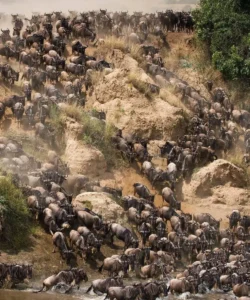
Best Places to See the Great Wildebeest Migration in Tanzania in 2027
The Serengeti is enormous, and different regions offer different migration experiences throughout the year.
1. Southern Serengeti and Ndutu: January to March
Best for: Wildebeest calving and predator sightings
The southern Serengeti plains and the Ndutu area are among the best places to experience the migration during the early months of the year.
From January to March, large herds gather across the short-grass plains, where nutrient-rich grass provides excellent grazing for pregnant wildebeest and their newborn calves.
February is usually the peak of the calving season, although the exact timing depends on rainfall and local conditions.
This period offers opportunities to see:
- Large herds of wildebeest spread across the plains.
- Newborn calves taking their first steps.
- Lions, cheetahs, hyenas, and other predators hunting.
- Zebras and gazelles sharing the grasslands.
- Beautiful green landscapes and dramatic skies.
The abundance of newborn animals attracts predators, making this a rewarding season for wildlife enthusiasts and photographers.
Who should visit?
Travelers interested in newborn wildlife, predator activity, photography, and large herds in open landscapes should consider a January, February, or early March safari.
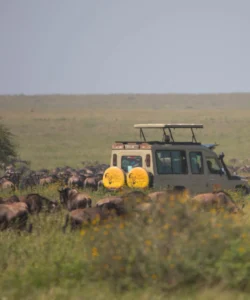
2. Central Serengeti: April to May
Best for: Year-round wildlife and herds on the move
Central Serengeti, particularly the Seronera area, is known for its resident wildlife and excellent opportunities to see big cats.
During April and May, many wildebeest begin moving away from the southern plains as grazing conditions change. Herd locations vary, and some animals may remain in the south while others move through central areas toward the west and north.
These months can offer green scenery, dramatic skies, and rewarding wildlife viewing. However, April and May are generally wetter months, and heavy rain can affect road conditions and travel times.
Possible highlights include:
- Herds moving across the central plains.
- Lions and leopards in their natural habitat.
- Elephants, giraffes, buffaloes, and other resident wildlife.
- Lush landscapes that are excellent for photography.
Who should visit?
Central Serengeti is a good option for travelers who want to combine migration viewing with general wildlife viewing. A flexible itinerary is particularly useful during this transitional season.
3. Western Serengeti and the Grumeti River: May to July
Best for: Moving herds and opportunities to see river crossings
As the migration progresses, many wildebeest travel through the Western Corridor toward the northern Serengeti.
The Grumeti River is one of the important obstacles along their route. Depending on the timing of the herds, travelers may have opportunities to witness wildebeest gathering near the river or attempting to cross it.
The Western Corridor can provide a different experience from the more frequently visited central plains, with riverine scenery, wooded areas, and excellent wildlife viewing.
Highlights may include:
- Long columns of wildebeest moving across the landscape.
- Opportunities to see Grumeti River crossings.
- Crocodiles in river habitats.
- Lions, hyenas, and other predators.
- Scenic game drives through less familiar parts of the Serengeti.
River crossings are unpredictable. A herd may approach the water and wait for hours or even days before crossing, so patience and a flexible safari schedule are important.
Who should visit?
This region is worth considering for travelers visiting between May and July who want to follow the migration as it moves northward.
4. Northern Serengeti: July to October
Best for: Mara River crossing opportunities
The northern Serengeti is one of the most sought-after destinations for travelers hoping to witness the dramatic river-crossing stage of the Great Migration.
During the middle and later months of the year, herds often gather around the Mara River and surrounding grasslands. Some cross between Tanzania and Kenya, while others remain on the Tanzanian side for extended periods.
August and September are popular months for northern Serengeti safaris, although the precise timing and location of crossings change from year to year.
Potential highlights include:
- Large herds gathering along the Mara River.
- Opportunities to witness wildebeest crossing the river.
- Crocodiles waiting in the water.
- Lions and other predators following the herds.
- Spectacular landscapes and wildlife photography.
A Mara River crossing can be dramatic, but it is never guaranteed on a particular day. Visiting the right region improves your chances of encountering the herds, but nature ultimately determines when and where the animals cross.
Who should visit?
The northern Serengeti is an excellent choice for travelers whose main goal is to experience the migration during the dry season, particularly those interested in river crossings.
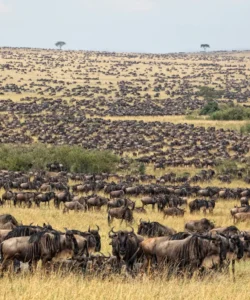
5. Northern and Central Serengeti: October to December
Best for: Quieter migration viewing and the herds’ return south
As seasonal rains begin to return, many wildebeest gradually move southward from the northern Serengeti toward central and southern grazing areas.
The exact route depends on rainfall and the availability of fresh grass. Some herds may remain in the north longer than expected, while others move south earlier.
This period can offer rewarding wildlife viewing and opportunities to experience different parts of the Serengeti.
Travelers may enjoy:
- Herds moving across northern and central plains.
- Resident lions, leopards, elephants, and other wildlife.
- Fresh green landscapes as the rains return.
- Opportunities to explore areas away from the busiest migration hotspots.
By late November and December, many herds begin returning toward the southern Serengeti and Ndutu area in preparation for the next calving season.
Who should visit?
These months suit travelers with flexible dates who want to experience the Serengeti’s wildlife and follow the migration as it moves south.
Great Wildebeest Migration Calendar for 2027
Use the following guide when choosing your travel dates. It shows the usual seasonal pattern rather than guaranteed animal locations.
| Months | Recommended region | Main experience |
|---|---|---|
| January–March | Southern Serengeti and Ndutu | Calving season and predator activity |
| April–May | Central and southern Serengeti | Green scenery and changing herd movements |
| May–July | Western Corridor and central Serengeti | Moving herds and possible Grumeti crossings |
| July–October | Northern Serengeti | Opportunities for Mara River crossings |
| October–December | Northern, central, and southern Serengeti | Herds gradually returning south |
The dates above are approximate. Rainfall can shift the migration, and the herds do not follow a fixed timetable.
For further planning information, consult the official Serengeti National Park website.
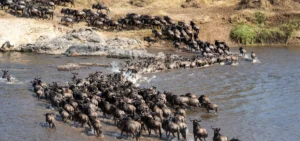
What Is the Best Month to See the Great Wildebeest Migration?
The best month depends on what you want to experience.
February: Choose the southern Serengeti or Ndutu for the calving season, newborn wildebeest, and predator activity.
June: Consider the central and western Serengeti for moving herds and the possibility of Grumeti River crossings.
July: Consider the western or northern Serengeti as the herds move north. This is also a useful month for travelers hoping to see the early stages of the northern migration.
August and September: Choose the northern Serengeti for opportunities to witness Mara River crossings. These months are popular, so booking accommodation early is advisable.
October: The northern Serengeti may still offer migration viewing and river-crossing opportunities, although herd movements depend on rainfall.
If your main goal is to see the calving season, plan for the southern Serengeti. If you want to maximize your chances of seeing Mara River crossings, focus on the northern Serengeti.
How Many Days Do You Need for a Great Migration Safari?
The number of days you need depends on the region you want to visit, your budget, and whether you would like to explore other national parks.
3–4 days: A short Serengeti safari
A short safari may be suitable for travelers with limited time. However, reaching the migration area and allowing enough time for game drives requires careful planning.
5–7 days: A more flexible migration safari
Five to seven days allows more time for wildlife viewing and may make it possible to combine the Serengeti with destinations such as Ngorongoro Crater or Tarangire National Park.
8–10 days: A deeper wildlife experience
An eight- to ten-day safari offers more flexibility to explore different Serengeti regions and spend additional time in areas where the herds are expected to be.
For travelers specifically targeting the Mara River crossings, spending several nights in the northern Serengeti is often preferable to moving between distant regions every day.
What Is the Cost of a Great Wildebeest Migration Safari in Tanzania?
The cost of a migration safari varies according to the season, accommodation, transport, number of travelers, and itinerary length.
The main factors affecting your budget include:
- Accommodation: Camping, comfortable tented camps, luxury lodges, and exclusive seasonal camps have different price levels.
- Season: Popular migration periods, especially August and September, can have higher accommodation rates.
- Transport: A private 4×4 safari vehicle and driver-guide offer flexibility. Flights between safari airstrips can reduce travel time but add to the cost.
- Park and conservation fees: These depend on the parks visited and the applicable fees and taxes.
- Safari duration: More nights in the Serengeti generally increase the total cost but provide more time for wildlife viewing.
Rather than choosing a safari based on price alone, consider how much time you will spend in your target migration region and whether the itinerary matches your travel dates.
For a detailed breakdown, read our Tanzania safari cost guide and request a personalized quotation based on your preferred travel dates.
Tips for Planning Your 2027 Migration Safari
A successful migration safari requires more than choosing a month. Here are several practical tips to help you prepare.
1. Choose your dates according to the experience you want.
Decide whether you prefer the calving season, herds on the move, or the possibility of Mara River crossings.
2. Book accommodation early.
The most popular seasonal camps in the northern Serengeti can fill up well in advance, especially during August and September. Early planning gives you a better choice of locations and accommodation styles.
3. Stay close to the expected migration area.
The Serengeti is vast. Staying in a camp close to the region where the herds are expected to be can reduce driving time and allow more time for game viewing.
4. Allow enough time for game drives.
Wildlife movements are unpredictable. Additional nights in the right region give your guide more opportunities to locate the herds.
5. Work with an experienced safari operator.
A knowledgeable local team can help plan your route, select suitable camps, and adjust your itinerary according to seasonal conditions and available information.
6. Keep your expectations realistic.
No safari operator can guarantee a river crossing or an exact herd location. A well-planned trip improves your chances, while also offering excellent opportunities to see the Serengeti’s resident wildlife.
What Else Can You See on a Tanzania Migration Safari?
Although the migration is a major attraction, the Serengeti offers much more than wildebeest.
Depending on the region and season, you may encounter lions, leopards, cheetahs, elephants, giraffes, buffaloes, hyenas, and many species of birds.
You can also combine your migration safari with other destinations in northern Tanzania.
Ngorongoro Crater: Famous for its remarkable concentration of wildlife and dramatic volcanic scenery.
Tarangire National Park: Known for elephants, baobab trees, and excellent seasonal wildlife viewing.
Lake Manyara National Park: Offers varied habitats, birdlife, and opportunities to see different wildlife species.
Adding these destinations can create a more varied safari, particularly for travelers visiting Tanzania for the first time.
Plan Your Great Wildebeest Migration Safari in Tanzania for 2027
The Great Wildebeest Migration is a remarkable wildlife experience, whether you witness newborn calves on the southern plains, follow enormous herds through the Western Corridor, or wait for the possibility of a Mara River crossing in the north.
The key to planning your 2027 safari is to choose your travel dates first, identify the region that best matches your interests, and allow enough time to enjoy the wildlife.
At Face of Africa Adventures, we can help you plan a Tanzania safari around your preferred travel dates, accommodation level, and wildlife interests.
Whether you are planning a short Serengeti adventure or a longer safari combining several national parks, we can help you create an itinerary tailored to your needs.
Ready to plan your 2027 Great Migration safari?
Contact Face of Africa Adventures to request a personalized itinerary and quotation.
Visit Face of Africa Adventures to start planning your Tanzania wildlife adventure.
Frequently Asked Questions
1. When is the Great Wildebeest Migration in Tanzania in 2027?
The migration takes place throughout the year. January to March is generally best for calving in the southern Serengeti and Ndutu, while July to October is a key period for migration viewing in the northern Serengeti and possible Mara River crossings.
2. Where is the best place to see the Great Migration in Tanzania?
The best location depends on the month. Southern Serengeti and Ndutu are recommended for calving season, the Western Corridor for the Grumeti River area, and northern Serengeti for Mara River crossing opportunities.
3. Can I guarantee seeing a Mara River crossing?
No. River crossings depend on the herds’ movements and changing environmental conditions. Staying in the northern Serengeti during the appropriate season can improve your chances, but a crossing cannot be guaranteed.
4. Is February a good time for a Tanzania safari?
Yes. February is generally an excellent month to visit the southern Serengeti and Ndutu for the calving season. You can also see predators and other wildlife in the surrounding ecosystem.
5. Is August a good time to visit the Serengeti?
Yes. August is a popular month for northern Serengeti safaris, when Mara River crossings may occur. It is advisable to book early and spend several nights in the northern region.
6. How far in advance should I book a 2027 migration safari?
For travel during the most popular migration months, especially August and September, booking well in advance is recommended. Early reservations give you a better choice of seasonal camps, lodges, and itinerary options.
7. Can I combine the Great Migration with Ngorongoro Crater?
Yes. Many itineraries combine the Serengeti with Ngorongoro Crater and sometimes Tarangire National Park. The best route depends on your travel dates, available time, and the migration region you want to visit.